
A certified copy and the information copy viewpatta returns are not the same document, and being told a record needs to be “certified” is where the confusion usually starts. This post works through what each type of copy actually shows, where a digital signature and verification reference fit in, and which situations typically call for one over the other. By the end, you’ll know what to ask the bank, court or registration office before you apply for anything.
What’s an information copy?
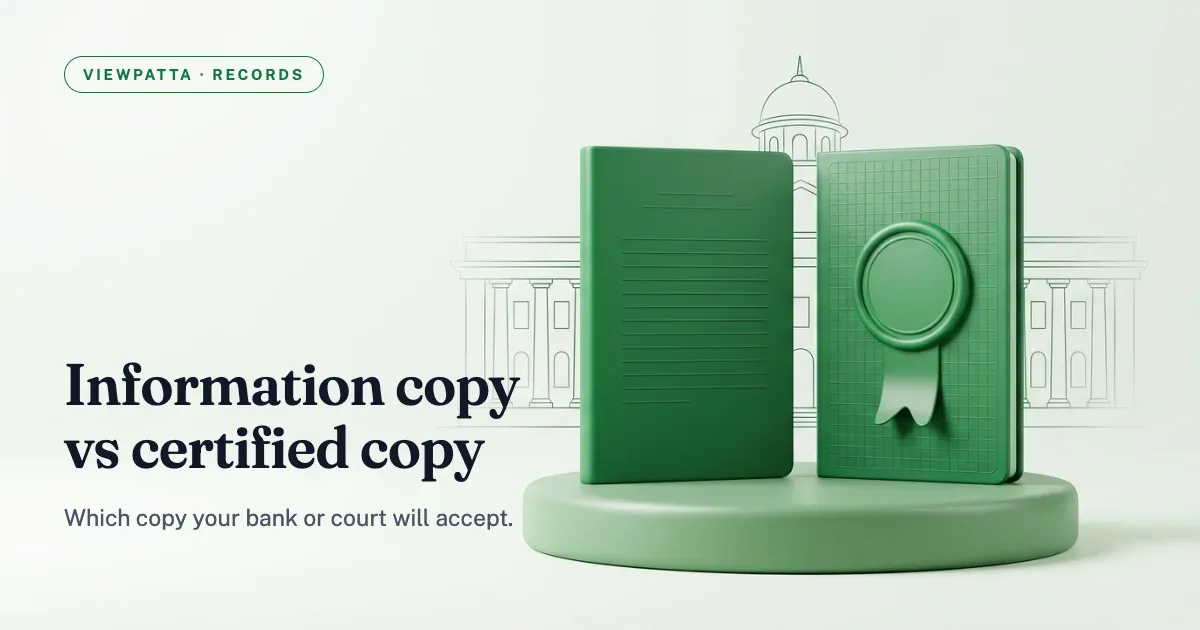
An information copy shows exactly what the source portal returns for a survey number, right now, with no certification layered on top. When you run a search through viewpatta for patta chitta, an A-Register extract, an FMB sketch, or a TSLR extract and sketch, this is the kind of copy you get: the recorded holder’s name, survey and sub-division details, land classification such as nanjai (நஞ்சை, wetland) or punjai (புஞ்சை, dryland), and the recorded extent. That’s enough to check a parcel against what a seller has told you, before you commit time or money to anything further.
What’s a certified copy?
A certified copy is issued through the relevant government or registration process rather than a plain search, and it’s meant to stand on its own as an authenticated document outside that source system. It typically carries a digital signature, a certification stamp, or a verification reference tying it to the official record at the time of issue. Depending on what you need, that route runs through the Tamil Nadu e-Services portal for patta-linked documents or through TNREGINET for an encumbrance certificate, though the exact process varies, so check with whichever office you’re applying to. What counts as “certified” is set by the process that issues it, and the format can differ from an information copy even when the underlying data is the same.
What does a QR code verify?
A QR code or verification reference on a digitally signed document lets anyone check its authenticity independently, without going back through the office that issued it. You, or the bank or court receiving it, scan the QR code or enter the reference number on the same portal that issued the document, and it confirms whether the document still matches the current record. That’s what “digitally signed” actually protects: not that the underlying data is more accurate than an information copy, but that this specific document can be traced back to its source and hasn’t been altered since. If a verification check fails, treat that as a reason to go back to the source rather than rely on the document as it stands.
When do you need certification?
Certified copies typically come up when a third party needs to rely on the document without checking the source portal themselves. Which of these actually require certification, and in what form, varies by court, lender and case, so treat this as the shape of situations where certification tends to matter, not a guarantee of what any specific office will ask for. When in doubt, the office asking is the one to check with.
- Court proceedings or disputes over title
- Home loan or mortgage processing at some banks
- Certain registration department submissions
When is an information copy enough?
An information copy is enough when you’re screening a parcel before you commit to anything else: checking that the recorded holder’s name matches what the seller told you, confirming survey details and land classification, or getting a sense of the recorded extent before you spend money on a fuller title check. This is early-stage due diligence, not proof you’re handing to a third party. If your search comes back with a complete result, you’re looking at the same underlying data a certified copy would show; you just haven’t paid an authority to stamp it as authenticated for someone else’s benefit yet.
Who sets the certification rules?
The office asking for the document sets its own certification requirement, not the source portal and not viewpatta. Before you apply for anything beyond a plain search, ask the bank, court or registration office directly what they’ll accept: whether a digitally signed document with a verifiable reference is enough, or whether they need a copy certified through their own process. Asking first saves you from paying for and waiting on a certified copy that turns out not to match the format the receiving office actually wanted.
What if records and deed disagree?
When your patta-linked records and your sale deed don’t match, that’s often because they answer different questions, not because one of them is wrong. The deed records what changed hands between buyer and seller, while patta-linked records show what’s currently reflected in government revenue systems, which only update through a separate transfer process after registration. If extent, classification or the holder’s name differ across these, reconcile them against the full deed chain rather than assuming either is correct. Where the mismatch doesn’t resolve on its own, or the stakes are high, get qualified legal or survey advice.