
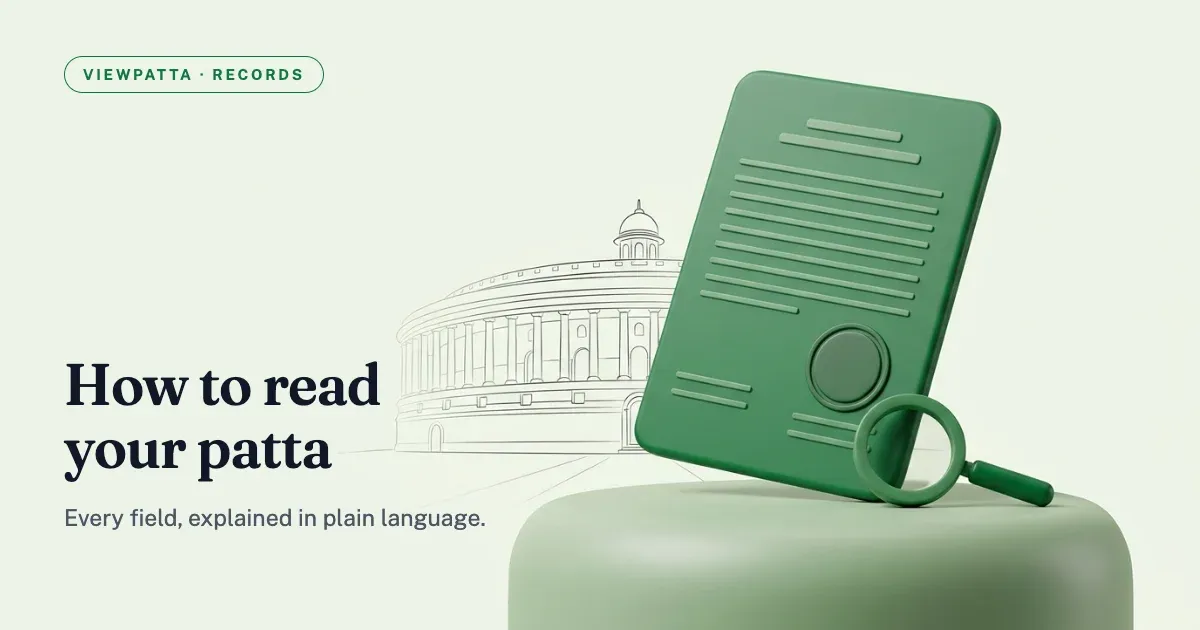
A patta packs a lot into one page, and most of it is written the way the revenue department talks, not the way you do. This post walks through each field so you know what the record is telling you — and what to check first.
The location block
The top of the record names where the parcel sits: district, taluk and revenue village. Check the village first. Village names repeat across Tamil Nadu, and a record for the wrong Semmancheri looks exactly as official as the right one.
The patta number and the holder
The patta number identifies this holding in the village records, and the holder rows name who the revenue department records for it. Check every spelling against the sale deed. A name recorded with a different initial or spelling is worth resolving before it matters.
Survey number and subdivision
The survey number identifies the parcel of land, and the part after the slash — the subdivision — narrows it to your portion. 123/1 and 123/2 are different pieces of ground. Both parts should match the schedule of your deed exactly.
Classification: nanjai and punjai
The classification columns record the land type: nanjai (நஞ்சை) is wetland, punjai (புஞ்சை) is dryland. Classification affects how the land is assessed and what approvals a future use may need, so confirm it matches what you were told about the parcel.
Extent
The extent columns give the recorded area, usually in hectares and ares. Compare it with the area in your deed. Small differences have ordinary explanations; large ones deserve a survey before money changes hands.
The signature and verification block
A digitally issued patta carries a signature block naming the issuing officer and a QR code or reference for verification on the government portal. That block is what makes the copy checkable — anyone can confirm the record against the source.
- Check the holder names, letter by letter, against the deed
- Check the survey number and subdivision match the deed schedule
- Check the classification and extent are what you expect
- Use the QR or reference to verify against the portal
What a patta is not
A patta is a revenue record, not proof of ownership by itself. It tells you who the department collects revenue from, not who holds clear title. Read it alongside the registered deed chain and an encumbrance certificate, and take qualified advice when they disagree.